Lewin's Birds of New South Wales
John William Lewin (1770 - 1819) lends his name to two birds. I hear one, the Lewin’s honeyeater, almost daily from the bushland at the bottom of the yard.
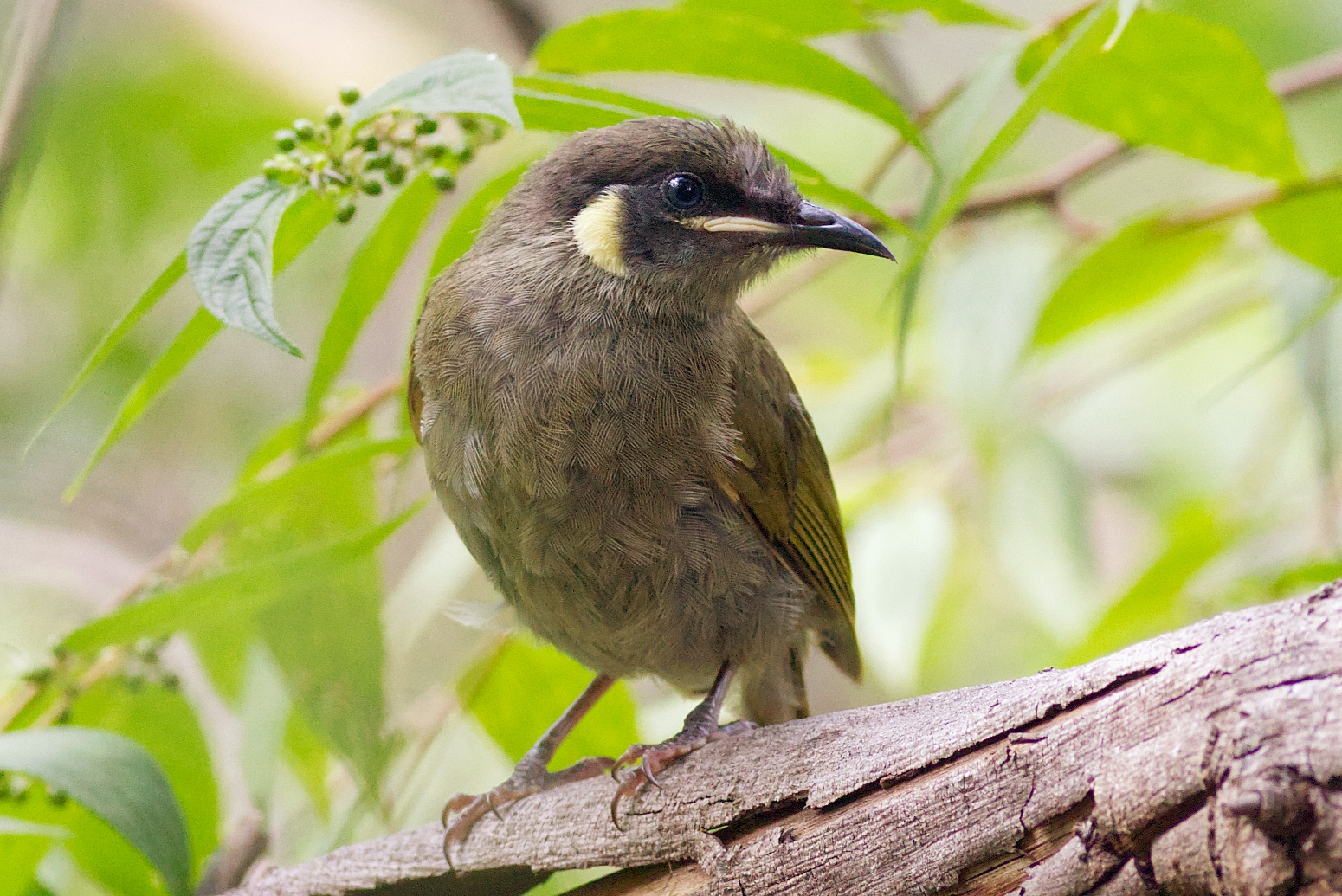
Simpson & Day describe the voice as “distinctive, 1-note, long vibrating ‘brrrrrrrrrrp’”. I have seen it described elsewhere, more accurately in my opinion, as a machine gun-like rattle.
Lewin’s other bird, the Lewin’s rail, doesn’t really live around these parts. “Secretive” says Simpson & Day. The basic facts of John William Lewin’s life can be found in a rather sparse Wikipedia entry and it’s here that I learned about his book, Birds of New Holland with their Natural History.
“New Holland” becomes “New South Wales” in later editions of the book, one of which was the first illustrated book to be printed in Australia. Digitized versions are available at several sites online and are best browsed in thumbnail view. Here, for example is the 1808 “New Holland” edition and here, the 1813 edition.
My first impression, as something of a bird enthusiast, is that the illustrations are delightful. The birds are instantly recognisable to anyone who has seen them in the field. Here, for example, are the golden whistler and the azure kingfisher.
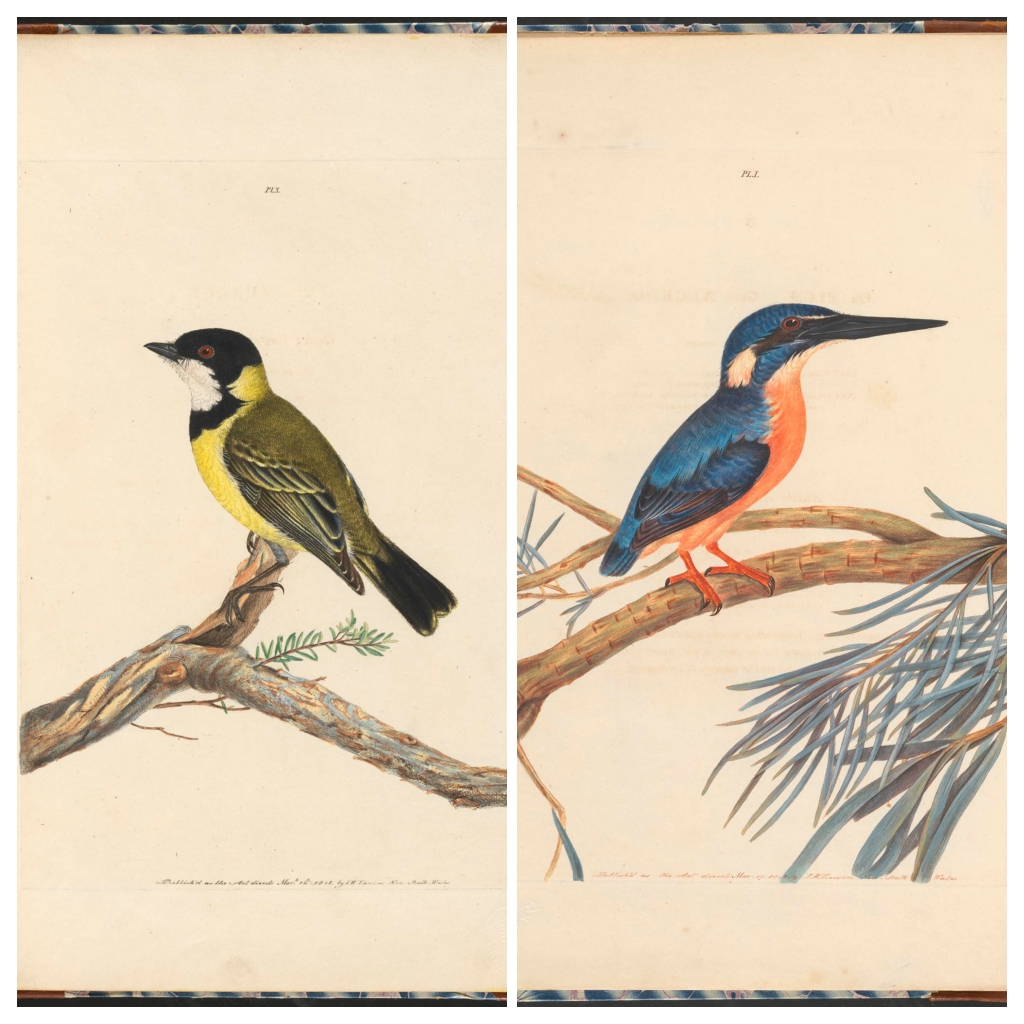
Less recognisable are the names, which provide fascinating records of how nomenclature and taxonomy change over time. The golden whistler, for example, is referred to in the 1808 edition as the black-crowned thrush. The azure kingfisher gains an ’s’ in 1808 - the azure kingsfisher - but by 1813, is the three-toe kingfisher. Of all the birds featured in both editions, only the reed and rock warblers bear their recognisable modern-day names.
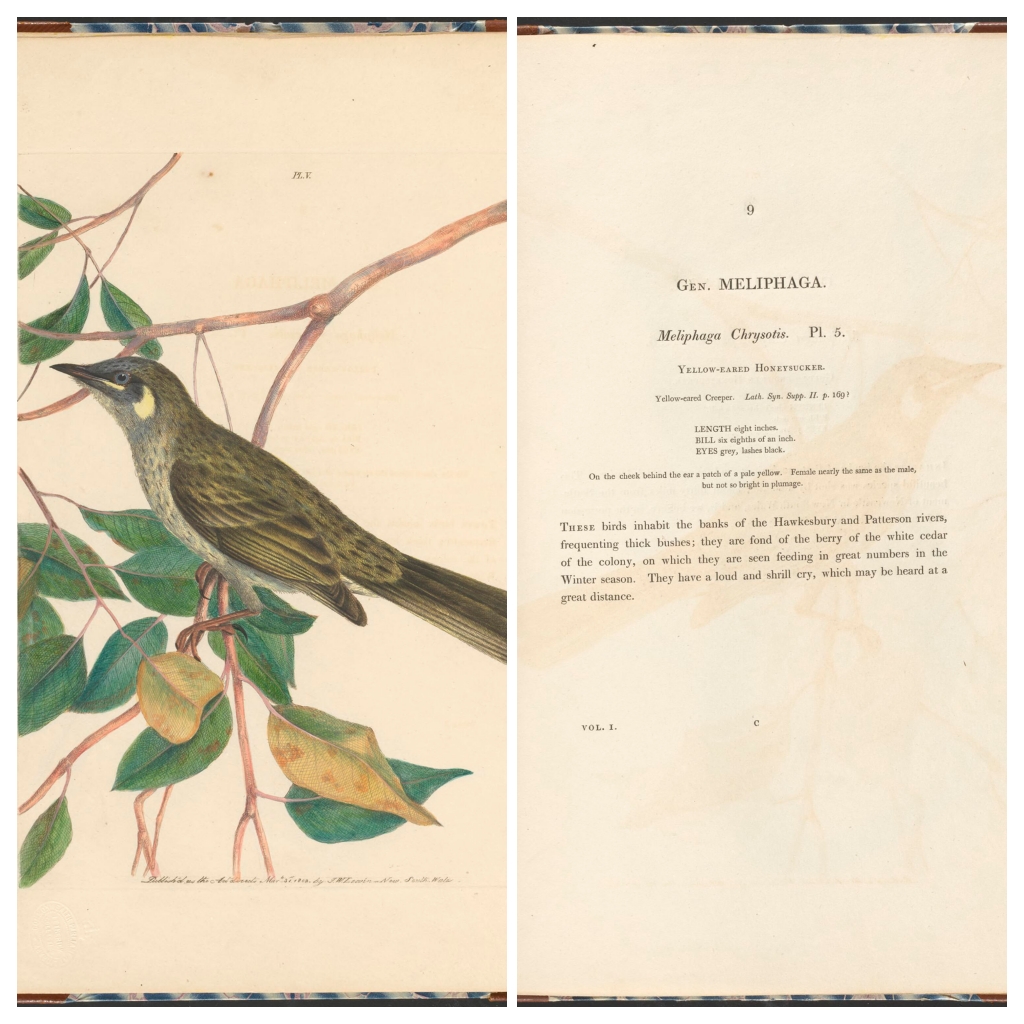
What of the honeyeater that now bears Lewin’s name? It features in his books under the name “Yellow-eared honeysucker”, Meliphaga chrysotis. The same genus as today, but now named Meliphaga lewinii.
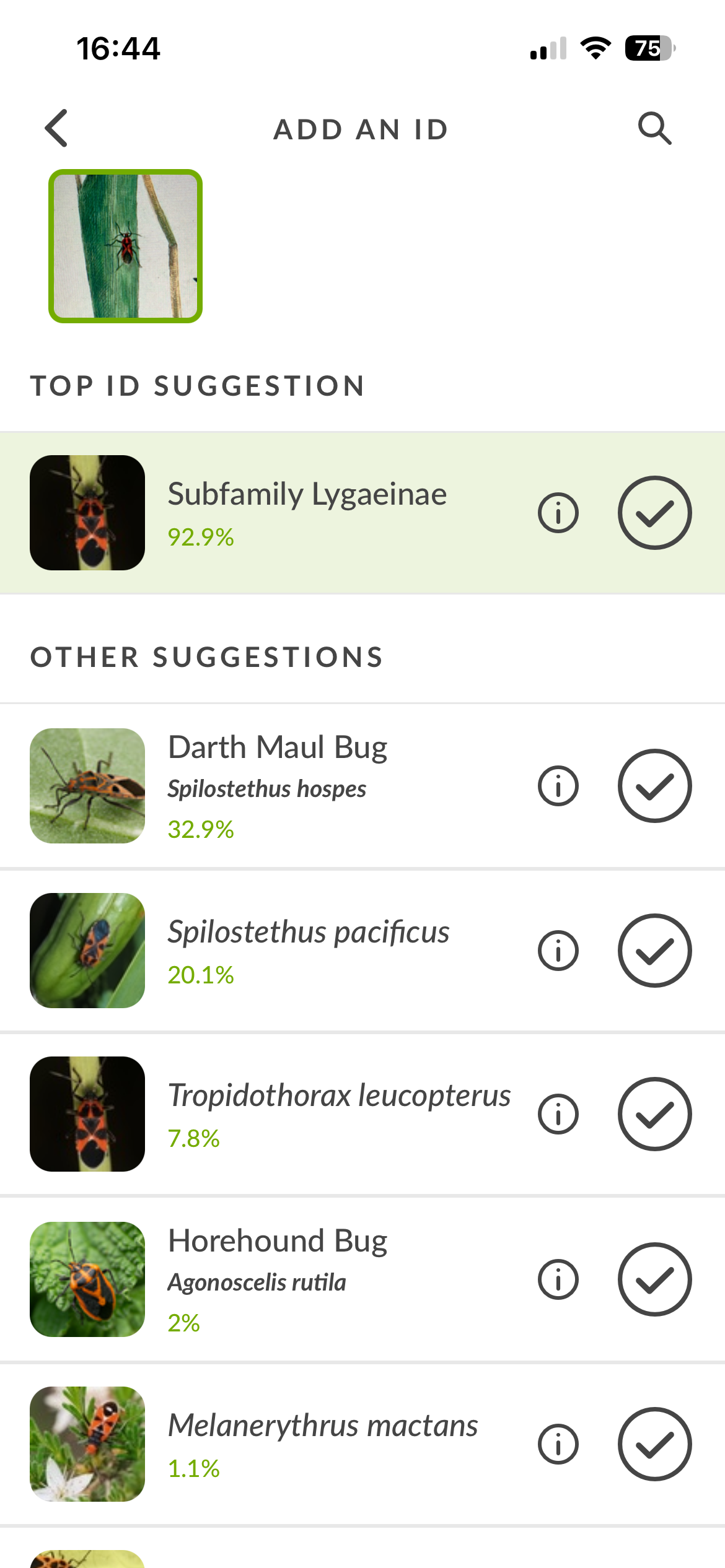
There are other interesting details in the illustrations. Next to the reed warbler, for example, is a small black and red insect.
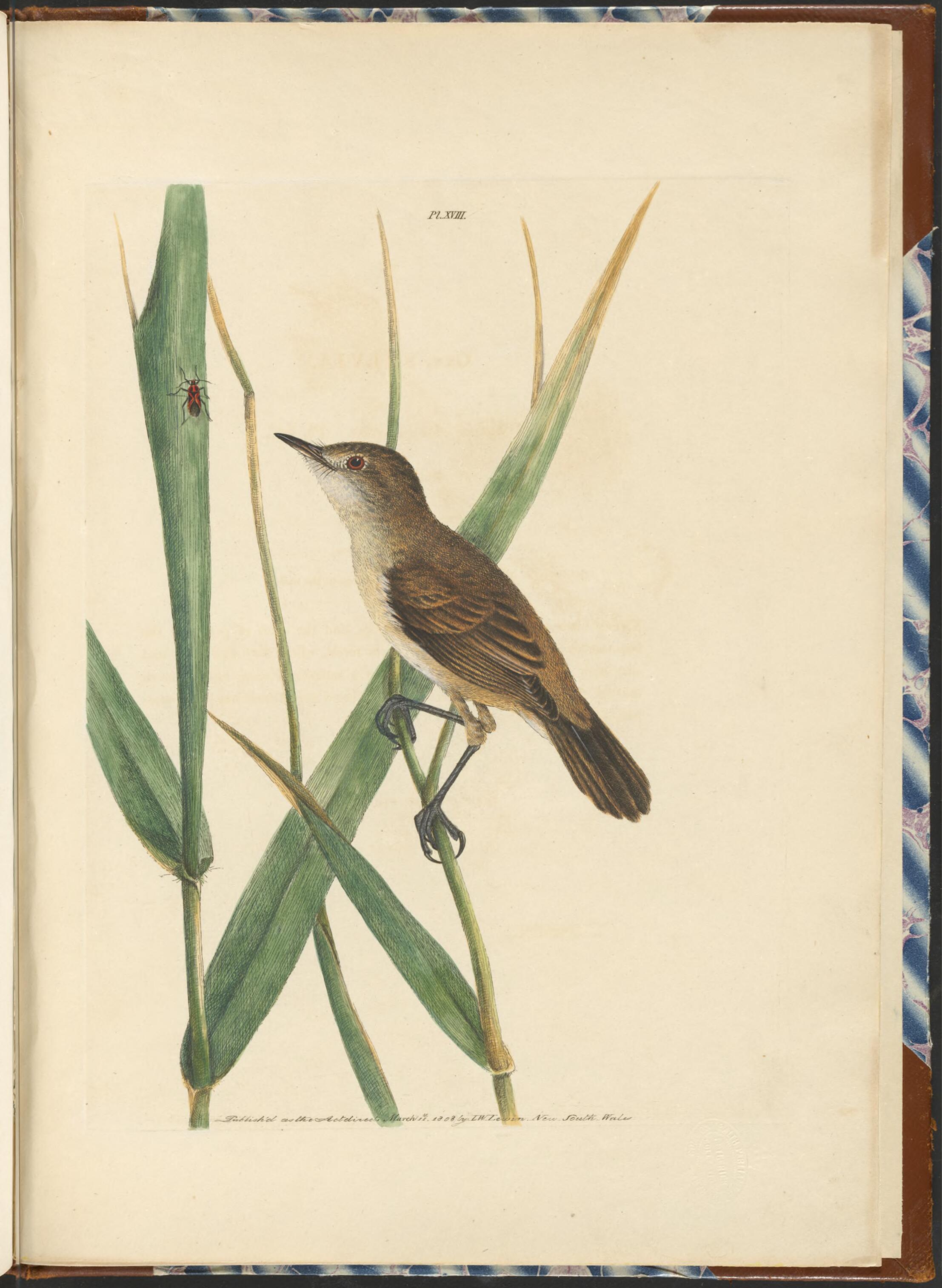
It’s detailed enough that you can submit the image to iNaturalist and receive plausible identifications.
Lewin’s 1808 Birds Vol. I. appears to have been the start of a larger project that never took shape - there never was a Vol. II. Almost all of the birds featured are quite common today, suggesting that he started simply with those that he saw around him. There is one sad exception.
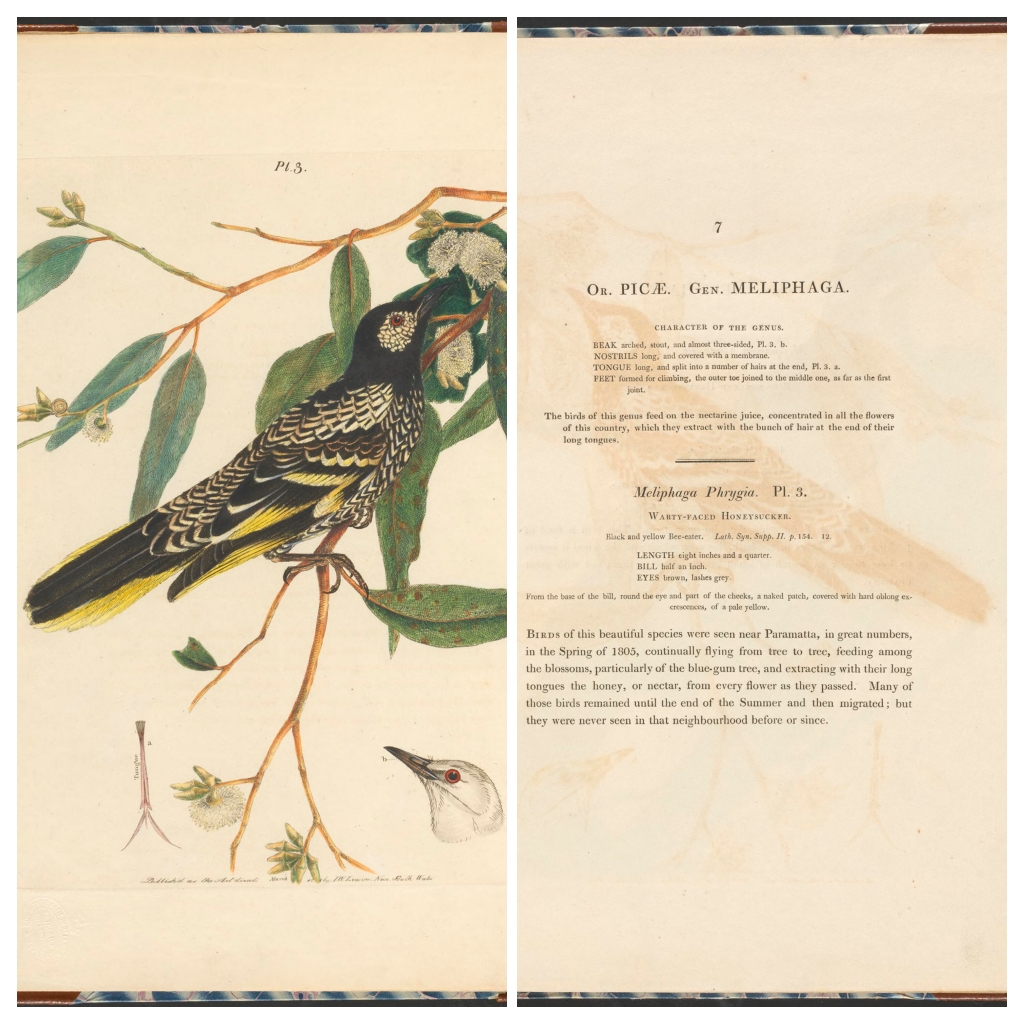
“BIRDS of this beautiful species were seen near Paramatta, in great numbers, in the Spring of 1805” writes Lewin, who then adds the eerily-prophetic words “but they were never seen in that neighbourhood before or since”. To him it was the warty-faced honeysucker, Meliphaga phrygia. Abundant in Lewin’s time it’s known today as Anthochaera phrygia - the regent honeyeater - and is critically endangered, with only a few hundred left in the wild. Please, donate if you can.