On The Propagation Of Native Plants From Cuttings
Near the top of my street, growing out of a small termite mound, is a spectacular specimen of Hardenbergia violacea.
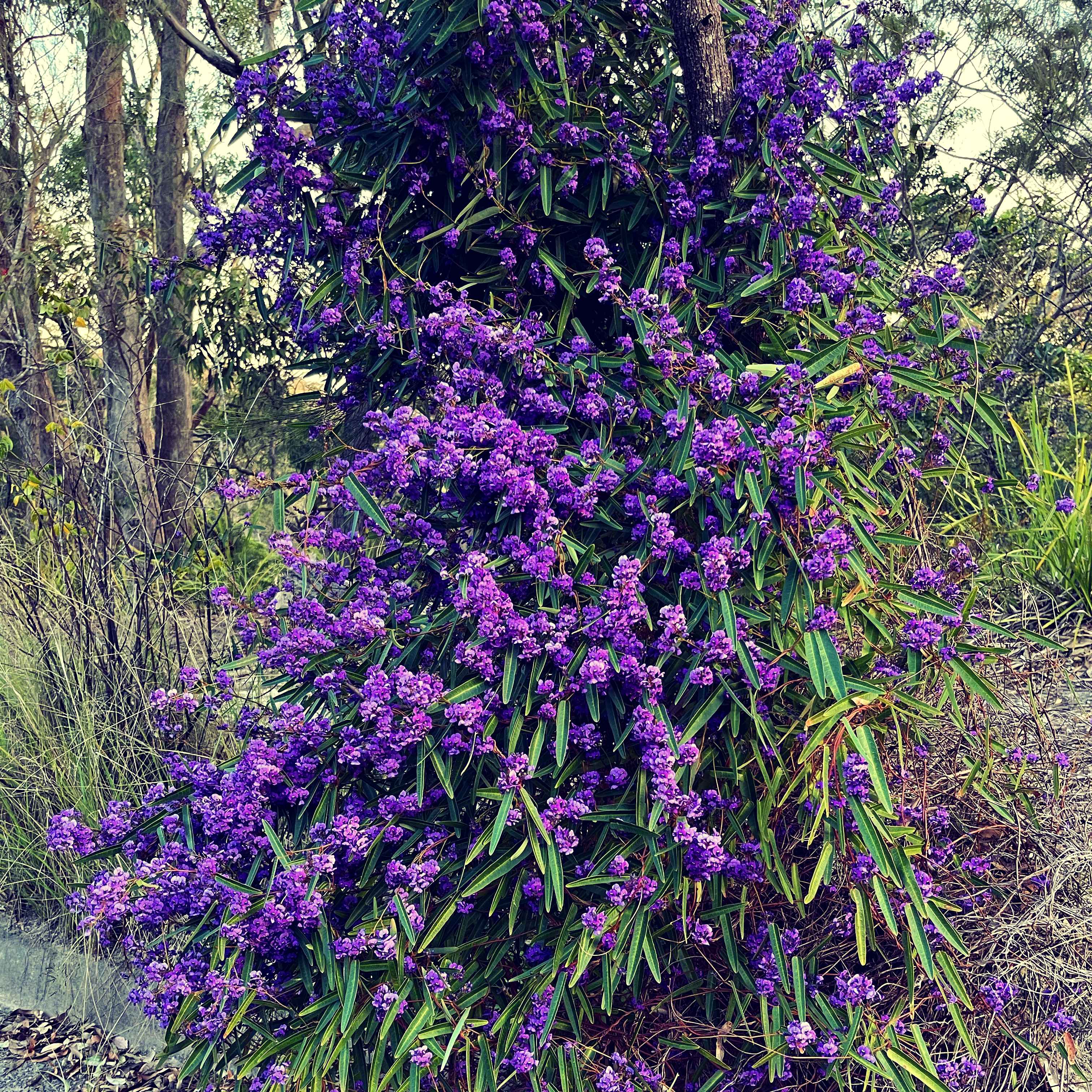
That’d look great in my backyard, I thought, I wonder - would it grow from cuttings? (Spoilers: yes). Here then, is the little that I have learned about how to propagate natives from cuttings, offered in the hope that it might help someone else.
Start with a reliable guide
Get started by finding and using instructions written by someone who sounds like they know what they are doing. You can make modifications later, when you know what you’re doing.
I’ve read a few guides: this one from Gardening Australia has a good blend of clear, simple instructions and tips.
Understand the science
When propagating from cuttings, the aim is to generate and grow roots. With a little understanding of plant biology, it should become apparent how each component of the propagation process contributes to this goal.
- actively-growing material (soft, semi-hardwood or hardwood) - is more likely to generate new tissue
- cutting near a leaf node - nodes are regions of active differentiation into different tissue types
- removal of lower leaves - to reduce water loss and divert energy into root growth
- warmth - to accelerate biochemical reactions
- humidity - to keep growing roots moist and reduce water loss through the remaining leaves
- drainage - to keep the roots oxygenated and not waterlogged
- rooting hormone - to stimulate growth and differentiation
Of course as a biologist by training, I’d argue that increased understanding of biology in general is likely to enhance your understanding and enjoyment of the world.
Humidity is good, sogginess is bad
Humidity provides moisture for growing roots and reduces evapotranspiration through leaves. Too much humidity however, can lead to rot. For some species it can be quite difficult to get the balance right.
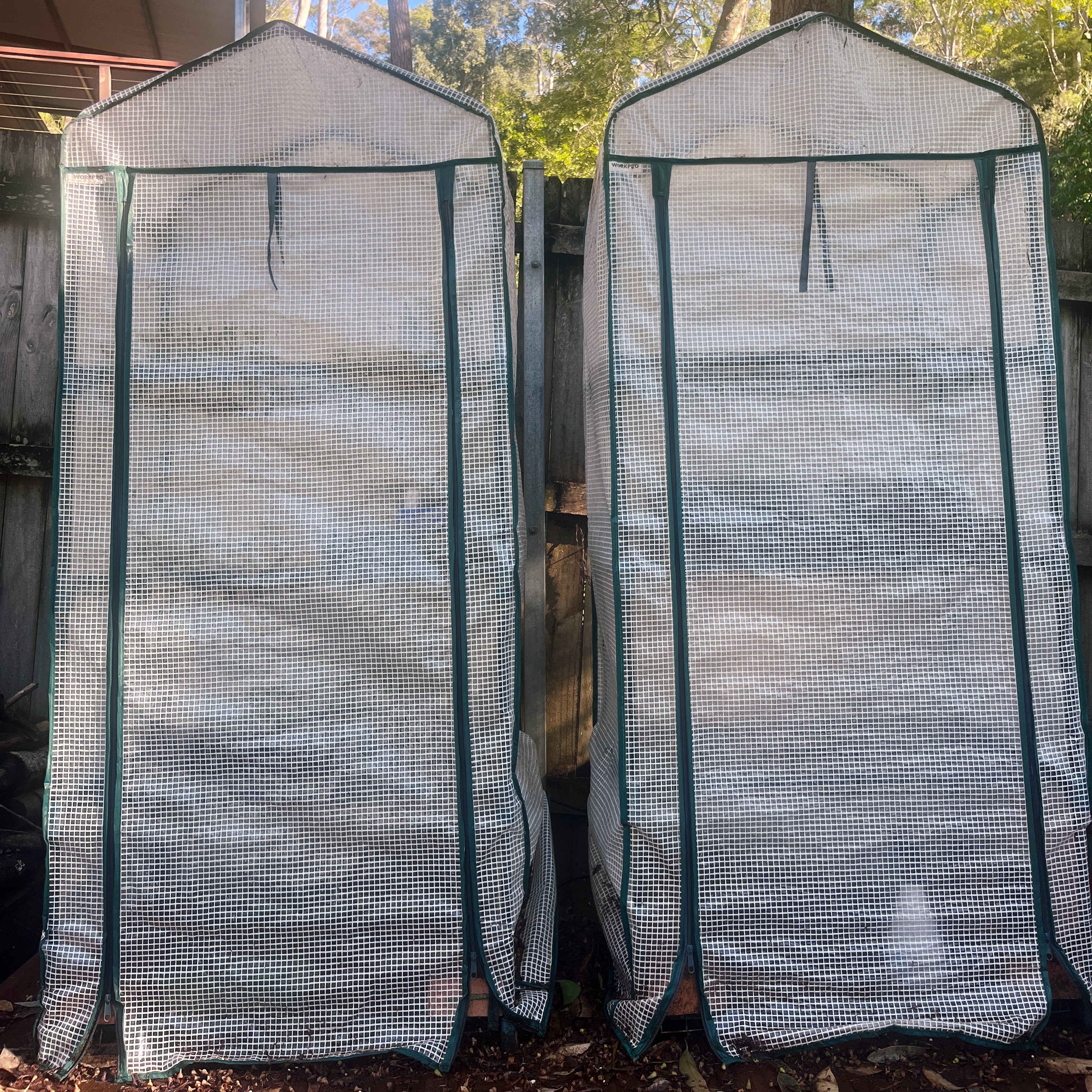
I’ve tried clear plastic bags held over pots using an elastic band and “mini-greenhouse” propagation trays with vented lids. Both have yielded some good results. My current favoured setup uses a free-standing mini-greenhouse with an automated misting system. This seems to provide adequate humidity and air circulation, plus of course warmth during the colder months.
The medium matters
I started out using a 1:1 mix of perlite and coir peat, to retain moisture whilst providing adequate drainage. I’ve had success with that but in some cases where plants are soft, silvery and have fine hairs, even this mix is too wet and leads to rot.
For those cases I switch to 1:1 propagating sand and perlite. You could probably increase the ratio of perlite in a perlite-coir peat mix too, to something like 3:1.
Rooting hormones probably make a difference
Rooting hormone is typically a preparation of indole-3-butyric acid (IBA). I’ve used both gels, sold as Clonex in hardware stores, and powder, sold as ‘Bontone II’ on Amazon. Anecdotally, my impression is that the powder generates stronger roots in greater numbers.
I have not performed control experiments with and without rooting hormone. I suspect that some of the easier species (see below) form roots just as easily without rooting hormone, but it costs nothing in terms of time to use it.
Time of year
Given that root growth requires warmth and actively-growing plant material, it’s best to take cuttings in spring, summer or autumn. That said, I have started cuttings in very late autumn/early winter and achieved roots. Just be aware that you’ll need to provide warmth and wait longer than usual - more like eight weeks than four.
Speaking of waiting…
Patience
…patience really is the key to propagation. There’s little point in looking at cuttings every day, or even every week and expecting to see progress. By all means look at them for enjoyment of course.
Set them up, then put a recurring reminder at set intervals in your calendar. Four weeks minimum for quick-rooting species in summer. Six, even eight is better. There’s plenty of other things to do in the meantime.
With experience it becomes obvious whether a cutting is developing well, slowly or dying. New growth sometimes appears and for vigorous plants, roots start to protrude from the base of the tray or pot.
Prepare for a deep sense of satisfaction when those roots appear.
Some species are just easier than others
Plants vary in all characteristics and ease of root formation is no exception. There’s a complete range from “can’t fail” all the way through to “near impossible”.
I’d suggest starting out with something easy. In my experience, species in the “never fail” category include Hardenbergia violacea, Chrysocephalum apiculatum and Goodenia ovata. The latter I have seen develop roots in moist air.
There’s a reasonable amount of information available online for different species. The “difficult for beginners” category would include Boronia; the “near impossible” includes, apparently Persoonia pinifolia.
Who knows though - you might be the propagator to make the breakthrough.