On Weeds
I guess we’d better start somewhere - so why not start with Ageratina adenophora - commonly known in Australia as Crofton weed.
To be clear, the genteel English definition of “weed” as “a plant growing in the wrong place” does not apply in the Australian native garden. I use “weed” as shorthand for “environmental weed” - introduced/exotic/non-native and potentially invasive and damaging to ecosystems. To be terminated where possible, as the movie quote goes, with extreme prejudice.
Our current (and so far only - quite possibly for ever) property was described by the real estate agent, some 15 years ago as being “surrounded by natural bush land, but with level lawn and cleared garden”. That was certainly true, and I am grateful for the bushland setting each and every day. The interesting part is the “cleared garden”.
One might imagine that a garden bordering bushland is likely to contain at least some native bushland plants. In fact with the exception of several trees, a shrub and some small groundcovers - of which more later - the typical northern Sydney bushland suburban garden is something of an ecological wasteland. Cleared of native vegetation, excavated, filled with material that may not even resemble the local soil type and then planted with introduced species, it becomes a haven for invasive weeds that spill over into the boundary between garden and bush. Between the tall trees and the low (non-native) grass, very little of interest exists, resulting in a haven for the noisy miner and a notable absence of smaller birds.
The native gardener then, faces several challenges. First, to remove the invasive species. Second, to plant native species, paying particular attention to the understorey. Third - I would argue - to act as custodian for the boundary where property merges with bushland, through bushcare programs where they exist or unofficial maintenance on unmanaged land otherwise.
Here are a few things that I have learned on my weed eradication journey.
Weeds can be eradicated
My backyard was once full of Crofton weed. Today, it’s gone. It is one of the easier weeds to remove from a small area, having weak and shallow roots that are easily pulled from the soil. Still, my point here is: it’s gone!
Eradication is possible.
Every little helps
Ideally everything comes out by the roots, leaving nothing behind. That works for Crofton weed, but all weeds are weedy in their own way. Asparagus africanus (African asparagus), for example, tends to snap low down on the stem when pulled and has an extensive tangled root system.
I don’t beat myself up about it. Every little helps. Every flower removed is one less fruit or seed. Every leaf removed is less sugar for growth. That last one is important; since the leaves feed the roots, a patch of weeds often just “gives up and dies” if leaves are removed as they appear. For larger problems - the evil Senna pendula or somewhat less evil Ochna serrulata (Mickey mouse plant - no laughing matter) for example, it’s perfectly acceptable to chop off the stems and return later, when you have more time and/or energy, with a mattock for the roots.
Every weed that doesn’t grow is space and nutrients for something else. Take this patch of Veronica plebeia (Australian speedwell), for example:
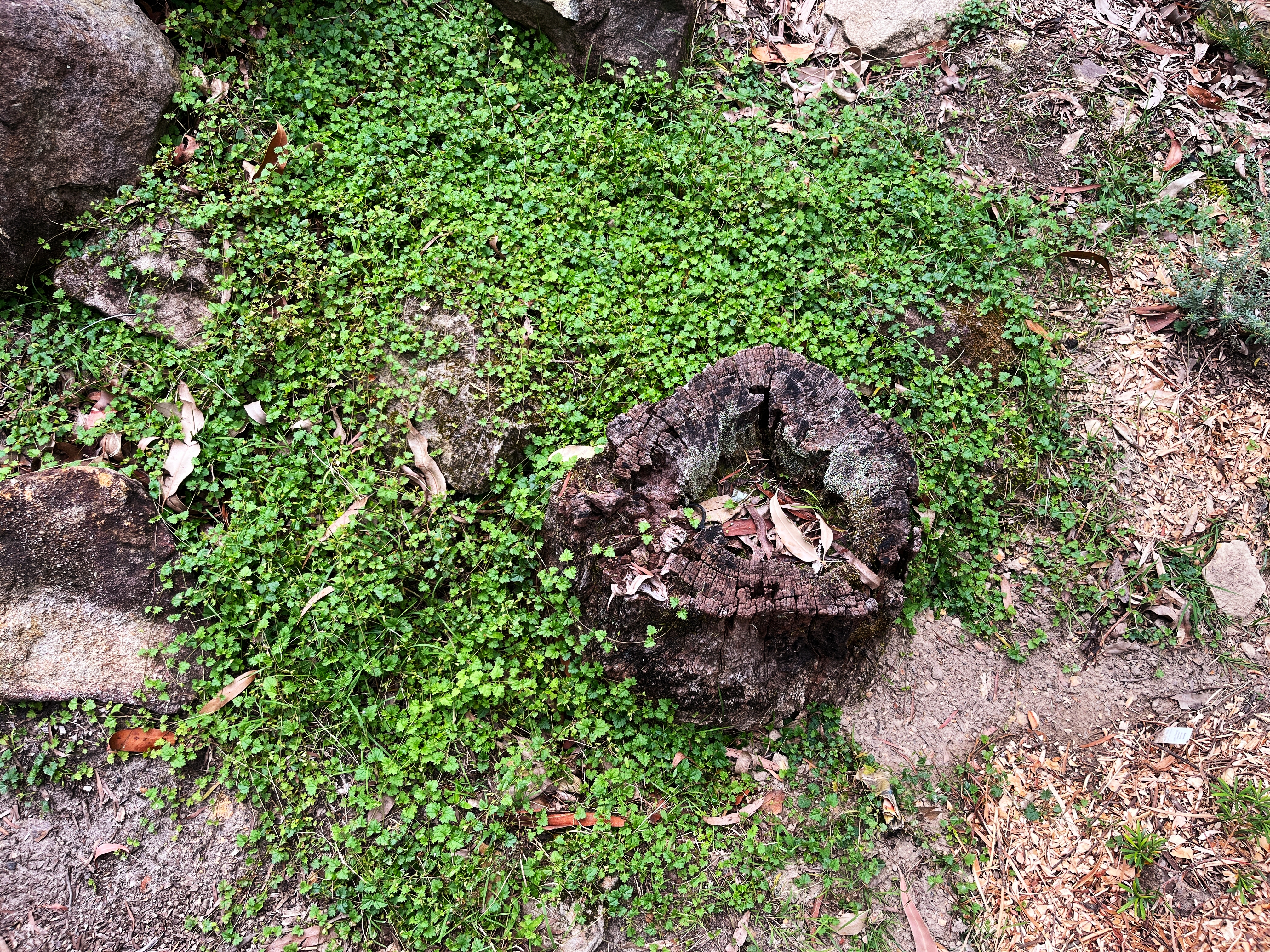
When I first started working on this site, the vegetation was probably around half of its current area and close to 50:50 speedwell:grass. Just pulling out a few blades of grass each time I pass the area, perhaps once a day, has encouraged the growth of the speedwell to the point that it now out-competes the grass. As a side note this area is rarely watered, yet the speedwell thrives. Endemic plants: truly “the right plant in the right place”.
A blitz helps too
We lead busy lives. We are tired. Still, there are days when we wake with purpose and energy, and have several hours to spare. Those are the days for a weeding blitz.
The weed problem in the lower reaches of my backyard was largely crushed in the course of one Saturday. Similarly, the grassy slopes were turned into grass-free garden beds over two or three afternoons of vigorous mattock work.
When the energy comes use it well and you’ll create a bank of enjoyable time for the future.
Endemic natives may be just waiting to recover
For many years I thought that the sum total of native species in my backyard was seven trees: two large Eucalyptus grandis (flooded gum), probably planted when the house was built; three Angophora costata (Sydney red gum), one Acacia fimbriata (Brisbane wattle) and one Acacia floribunda (gossamer wattle).
On closer inspection however, there were endemic (that is, local to the area) species just waiting for a chance. Hidden in the tangled stems of an unidentified exotic with pink flowers: Lomatia silaifolia (crinkly bush).
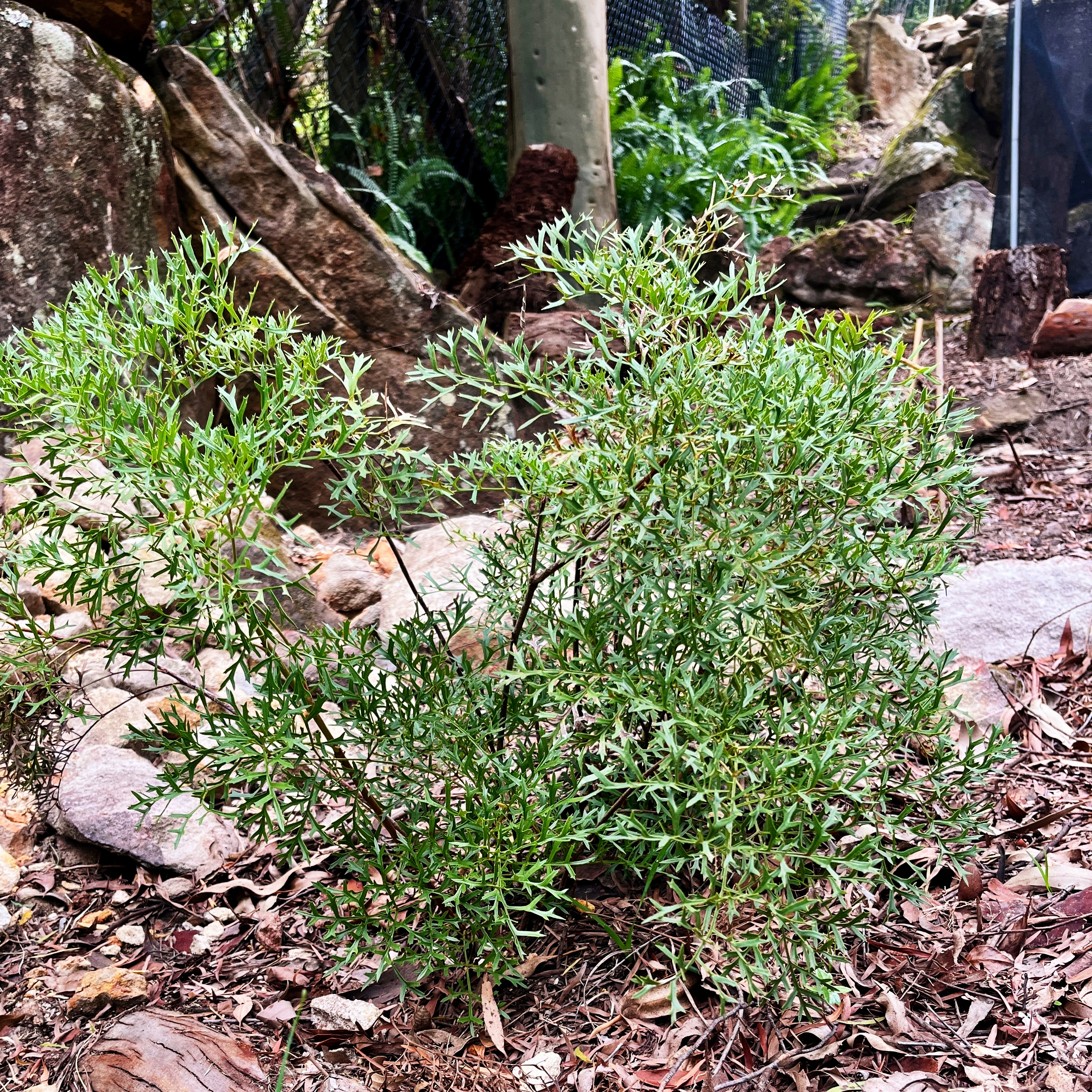
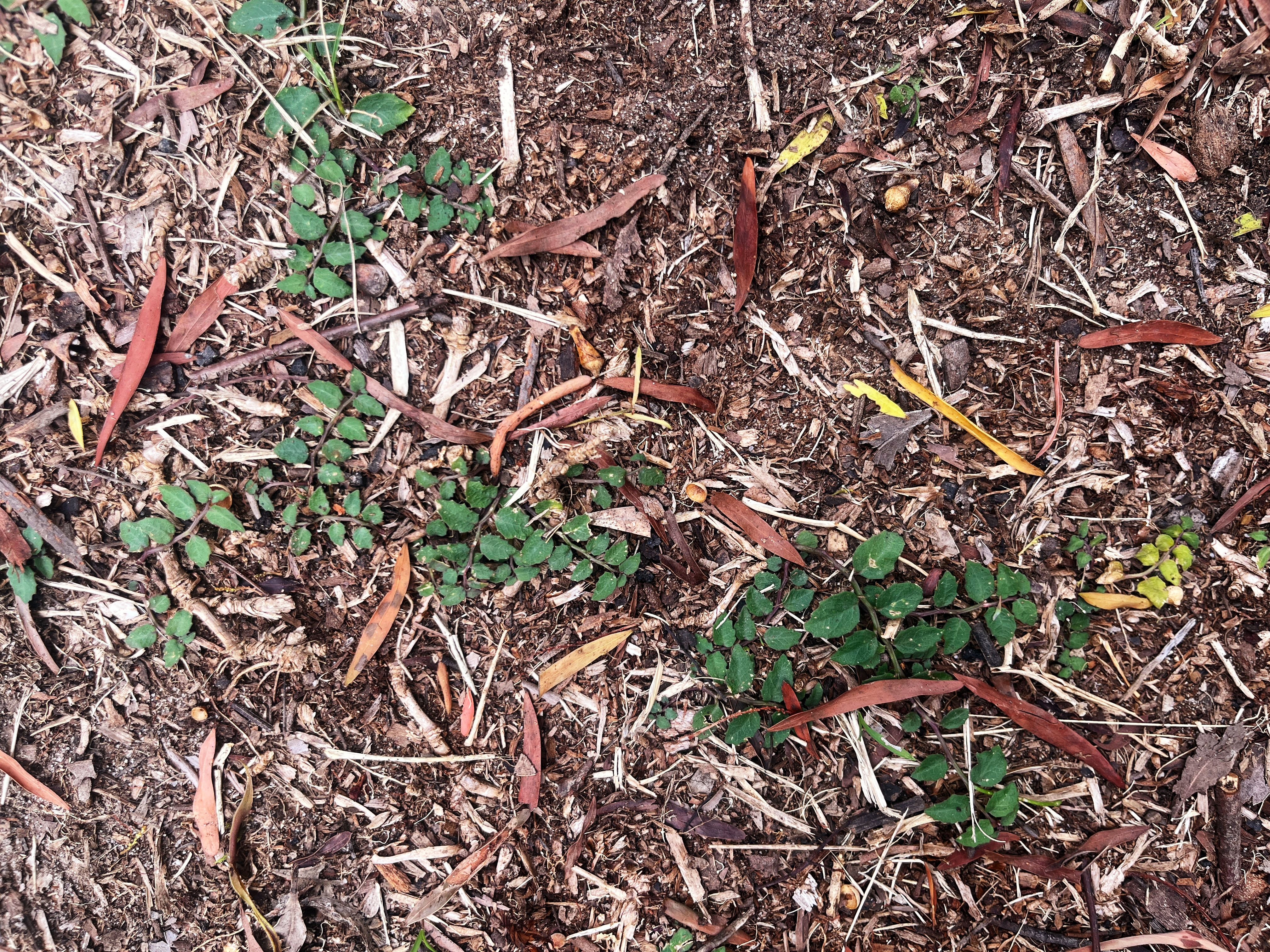
Tangled in long grass and resembling several types of weed but in fact none of them: Commelina cyanea (scurvy weed). The aforementioned Veronica plebeia crops up in various places. And down in the lawn at the bottom of the yard: Lobelia purpurascens (whiteroot).
All of these, once identified, can be encouraged and cultivated by removing their weedy competitors. Here, for example, is Lobelia purpurascens working hard to fill the space where grass has been removed.
The boundary is finite, the responsibility is ours
One morning a couple of years ago, I got chatting to a couple of bush regenerators working to remove weeds from the forest that lines a local street. “The good thing”, one of them said, with sincere optimism, “is that once you get down there” - pointing into the bush - “the weeds disappear”.
He was right - I regularly wander “down there” to inspect trail cameras - and it’s beautiful diverse bushland with many native species present. The problem area is just a strip, maybe 10 - 20 metres wide at most, the boundary between bush and suburbia.
It’s the same at the bottom of my yard, beyond which lies national park land.
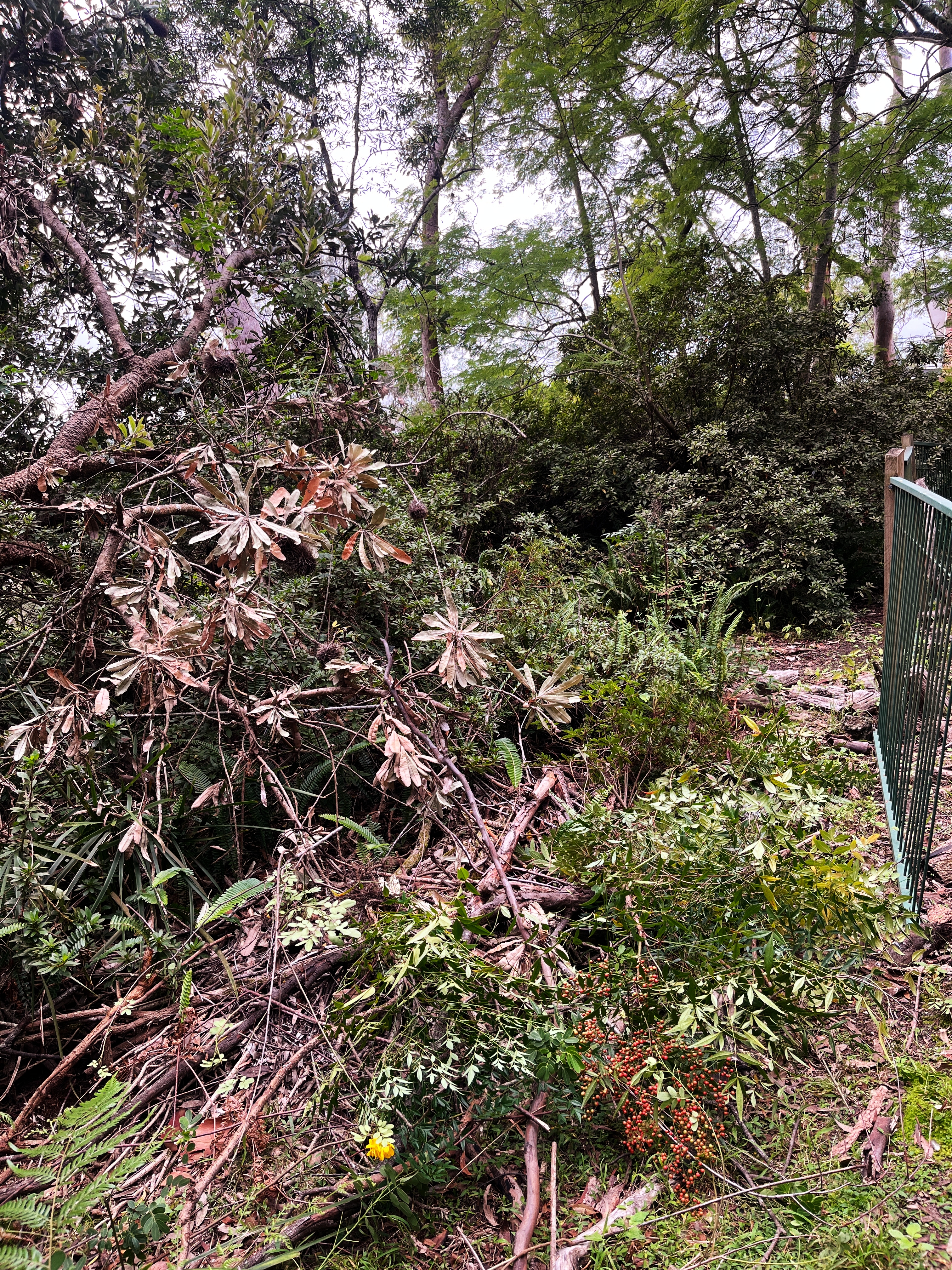
Garden escapes: large Azalea bushes, Senna pendula (did I mention that one is evil?), African asparagus, Nandina domestica (heavenly bamboo - it really isn’t) and the purple menace Jacaranda mimosifolia. Yet just beyond this strip: genuine Hawkesbury sandstone covered with trees: Angophora, Eucalyptus, Acacia; shrubs: Banksia, Ceratopetalum gummiferum (NSW Christmas bush), Hakea sp.; and groundcovers: Lomandra longifolia, Dianella prunina, to name just a few.
There are many fringes like this one: where suburbia meets national park which is largely unmanaged due to having no public access. Do those of us who choose to live here have some responsibility to limit invasive species where we can, through “unofficial” bushcare? I answer “Yes”.
Weeding will never be complete - and that’s OK
Weeding is a recurring task for any gardener, not one to ever be marked as “complete”. Seeds will enter from outside, long-dormant root fragments will suddenly sprout.
And that’s OK. Once the major offenders are eradicated or brought under control, weeding becomes less onerous, even enjoyable. Moving slowly through the garden, pulling out a leaf here, a shoot there, listening to Eastern whipbirds and Lewin’s honeyeaters, feeling the sun or the breeze. It becomes a pathway to mindful reflection - and isn’t that one major function of a native garden?